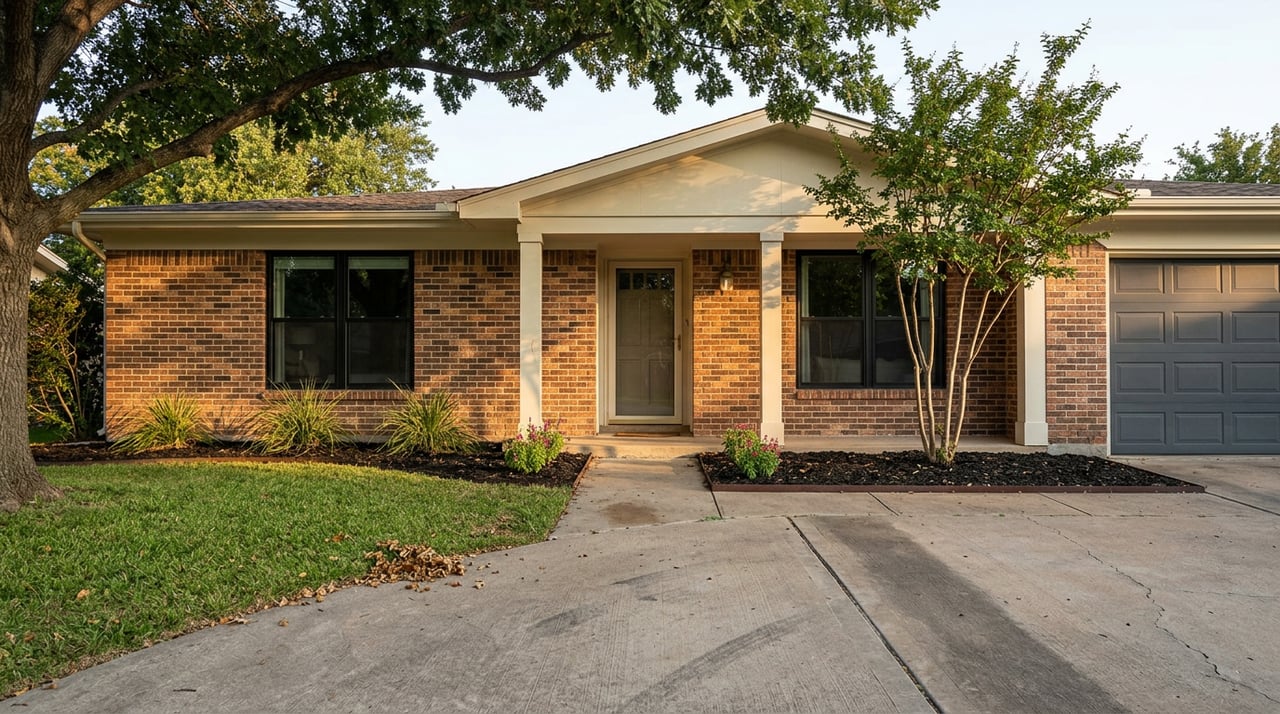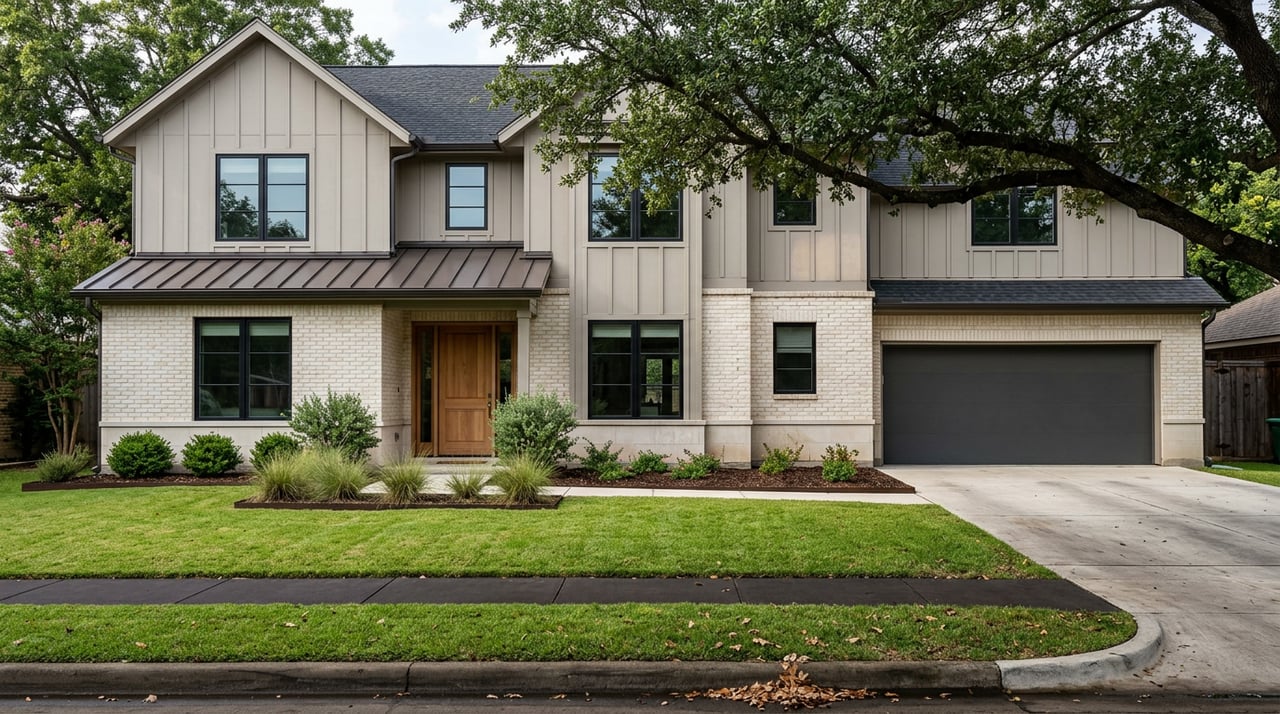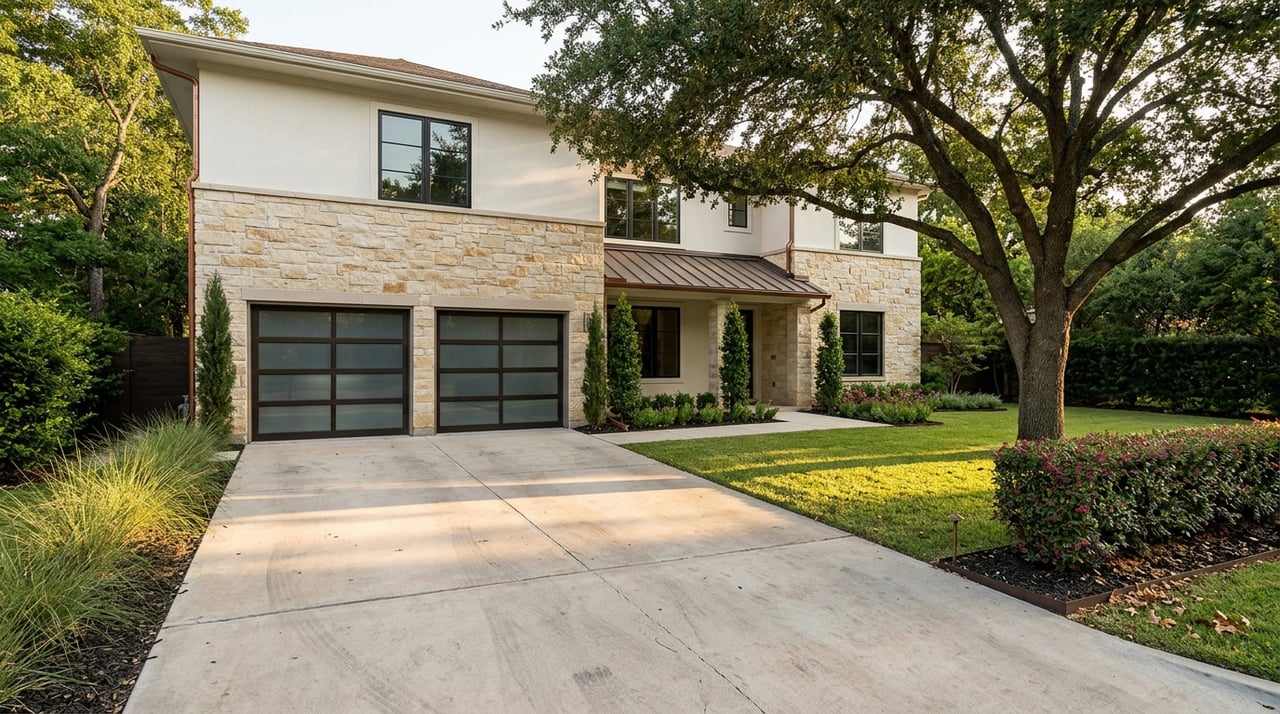
Picture two houses in the same Frisco subdivision. Same builder, same floor plan, same year built, same distance from the new Universal Kids Resort. One sits on the Collin County side of an invisible line. The other sits fifty yards away in Denton County. Every year, the Denton County owner writes a smaller check to the tax office than the Collin County owner does, and neither the theme park nor the school district nor the subdivision's HOA has anything to do with it.
That line, not the theme park two miles up the Dallas North Tollway, is the detail most Frisco house-hunting guides skip past. It matters more to your annual budget than almost anything Universal built this year.
What Actually Opened on the Tollway This Summer
Universal Kids Resort opened its gates on July 1, 2026, after limited preview days that started June 24. It sits inside Fields, the roughly 2,500-acre master-planned development at the Dallas North Tollway and Panther Creek Parkway that also holds the PGA of America's relocated headquarters and the Omni PGA Frisco Resort. The park cost an estimated $550 million to build and covers a comparatively small footprint, somewhere between 20 and 32 acres depending on which official figure you use, aimed squarely at kids ages three to eight with rides based on Shrek, Trolls, SpongeBob SquarePants, Jurassic World, and Despicable Me.
The neighborhood most directly touched by the project is Cobb Hill, which sits across the street from the resort's hotel entrance. Homeowners there spent years raising concerns at city council meetings about traffic, short-term rental conversion, and property values before the zoning was approved. The city's response was to build Universal Parkway, a dedicated road specifically routed to keep park traffic off Cobb Hill's residential streets, part of a broader $201 million investment in ten roadway projects across Frisco's northern corridor. Some Cobb Hill residents who once opposed the project have since said they've come around to the greenspace and separation the road provides.
What nobody engineered in advance was how the park would actually be received. Reviewers, including former Disney Imagineers quoted in trade press, panned the park as underthemed and short on shade, criticism serious enough that Forbes ran a piece in July titled "How To Fix Universal Kids Resort." Wikipedia's summary of the reception describes the park as cheaply designed and utilitarian, falling well below the standard of other Universal properties. Annual passes were still selling briskly at launch, and a competing family park called COTALAND is now in the pipeline for Austin, which means the entertainment draw that's supposed to anchor Fields' long-term cachet is facing both a rocky debut and fresh regional competition.
That's worth sitting with before you treat "walking distance to Universal" as a line item that adds value to a listing.
The Price Ladder Nobody Prints on One Page
Frisco's median sale price sat around $675,000 for the three months ending June 2026, per Redfin's tracking, down about 2.1% from the same period a year earlier. Zillow's typical home value for the market runs close behind at roughly $674,000, also down, about 2.7% over the trailing year. Those two figures agree closely enough to trust the direction: prices have softened slightly and inventory has loosened, giving buyers a bit more room to negotiate than they had two years ago.
But "median" flattens a market that actually breaks into distinct tiers, and the tiers matter more than the citywide number if you're deciding where your money goes:
| Segment | Typical range | What it gets you |
|---|---|---|
| Entry-level resale | Scarce under $500,000 | Standard 3-4 bedroom homes are hard to find below this floor |
| Move-in ready, popular subdivision | $650,000 to $750,000 | The bulk of Frisco's transaction volume |
| Condos and townhomes near Frisco Square or The Star | $350,000 to $550,000 | Smaller footprint, closer to the walkable core |
| Fields new construction (Brookside) | From the $700,000s | New-build finishes, smaller lots, Frisco ISD |
| Fields luxury (The Preserve) | $3.5 million to $25 million | Custom estates with golf course frontage |
| Established luxury (Starwood, Newman Village, Hills of Kingswood) | $1.5 million to $3 million-plus | Larger lots, gated privacy, no theme park adjacency |
New construction inside Fields and comparable growth corridors tends to command a premium of roughly 10% to 20% over resale homes with similar square footage, according to a market breakdown from a local buyer's agent. The instinct is to credit that premium to the golf courses and the theme park. A Dallas-based housing analyst who tracks new-home supply across North Texas has offered a plainer explanation: buildable lots in Frisco are running out. When land itself becomes the scarce input, new construction prices reflect that scarcity whether or not a theme park ever opened next door.
It's also worth flagging that marketing materials for Fields don't agree on where the development actually starts. Some guides cite Brookside homes from the $700,000s. Others describe Fields overall as starting near $1.3 million. Both can be true at once, since Fields is really a collection of villages with very different price points stitched together under one brand name, and the gated Preserve section pulls the "starting price" framing upward if you're not looking village by village.
The Line That Actually Changes Your Bill
Frisco straddles the Collin County and Denton County line, and that line runs through actual neighborhoods, not just a map legend. The City of Frisco's own tax rate is identical everywhere in city limits, set at 0.425517% of assessed value for tax year 2026. What differs is everything stacked on top of it.
For tax year 2025, homes in Frisco ISD on the Collin County side carried a combined base rate (city, county, Collin College, and school district) of roughly 1.675%. The same Frisco ISD homes on the Denton County side, which skip the Collin College layer entirely, carried a combined base rate closer to 1.631%. On a $700,000 assessed value, that 0.044-point gap works out to a difference of a little over $300 a year, money that has nothing to do with lot size, builder, or how close you sit to a roller coaster.
A few other wrinkles worth knowing before you write an offer:
Part of Frisco also falls inside Prosper ISD, Lewisville ISD, or Little Elm ISD depending on the parcel, and school district rates typically make up the largest single slice of the bill, larger than the county-line gap itself. Texas raised the school district homestead exemption to $140,000 for eligible primary residences starting with the 2025 tax year, and Frisco separately raised its own city homestead exemption to 20% for 2026, both of which shrink your taxable value once you file the paperwork, though the headline rate on a listing sheet won't show that reduction. And some newer developments layer on additional Municipal Utility District or Public Improvement District assessments that don't show up until you read the actual tax certificate. Some marketing materials for Fields cite a combined rate near 1.64% with no MUD or PID layers, which may hold for the sections built so far, but it's the kind of claim worth confirming parcel by parcel rather than assuming it applies to every future phase.
None of this is tax advice, and a property tax question specific to your own parcel is worth a call to the appropriate county appraisal district or a look at the City of Frisco's own property tax page before you sign anything. But it's the kind of structural detail that separates two houses a buyer might otherwise treat as interchangeable.
Who Actually Banked the Upside
Universal's incentive package from the city included $12.7 million tied to a requirement that the park open by June 2026. It opened July 1, just after that window closed. The city's own economic projections, reported by Axios, put the park's annual property and sales tax contribution to Frisco at around $3 million, separate from an earlier estimate that the broader project could generate roughly $200 million a year in regional spending. Those numbers describe money flowing to the city and to Universal. They say nothing about what happens to an individual homeowner's equity two streets from the gate.
That gap matters because the story being told in a lot of relocation content treats "near the theme park" as a straightforward value multiplier, the same instinct that assumes a Cowboys headquarters or a PGA campus automatically lifts every home price in its shadow. The honest version is more complicated. The park's construction timeline, its incentive structure, and its traffic mitigation were all negotiated and built years in advance by the city and the developer. The park's critical reception, on the other hand, has been rocky enough that Forbes felt the need to publish a piece on how to fix it within a week of opening. Cobb Hill residents worried their subdivision would turn into short-term rental inventory for park visitors, and Frisco's own Airbnb listings now do explicitly market drive time to Universal alongside The Star and the PGA campus, so that concern wasn't unfounded, though it's playing out at the margins rather than reshaping the whole neighborhood.
If you're comparing Frisco to Plano, McKinney, or Prosper right now, the honest read is that Frisco's premium is real, it's just not evenly distributed and it's not primarily coming from the theme park. It's coming from vanishing buildable land, from which side of a county line a parcel happens to sit on, and from a master-planned development that bundled a golf headquarters, a resort, and a theme park into one very large, very deliberately engineered bet. Whether that bet pays off for a homeowner in year five looks different than whether it pays off for the city in year one.
A Few Questions Worth Asking Before You Tour
Does being close to Universal Kids Resort guarantee a higher resale price down the road? Not on the evidence available now. The park opened barely two months ago to a mixed critical reception, and the premium buyers are already paying for new construction near Fields tracks more closely with dwindling lot supply than with the park itself.
Does it matter whether I buy on the Collin County or Denton County side of Frisco? It affects your annual tax bill by a few hundred dollars on a comparable home, mostly because of the Collin College layer, and it can also determine which school district serves the address. Confirm both before comparing two listings that look identical on paper.
Are there extra fees specific to Fields subdivisions? Some sections advertise no additional MUD or PID assessments, but that can vary by village and by builder. Ask for the actual tax certificate on the specific lot rather than relying on a community-wide brochure.
If you're weighing a move to Frisco against Plano, McKinney, or Prosper and want someone who can walk a specific parcel's tax history and county line with you before you make an offer, The Nuncio Realty Group has spent two decades tracking exactly this kind of detail across the metroplex. Reach out for an instant home valuation or a free consultation, and we'll help you see past the theme park headline to the numbers that actually land on your closing statement.